
By Leah Hromalik
Ever wondered what actually happens at an archaeological dig? This summer, students from SUNY Oswego are finding out at the historic McWhorter House in Fulton.
Built in 1828, the McWhorter House is an active archaeological site where students work under the supervision of director Dr. Alana Ossa. Their job is to carefully excavate areas around the property, uncovering clues about the people who once lived there. So far, they have discovered stone structures such as privies, (outdoor bathrooms located in the front of the house) and middens, which are essentially old trash heaps that can reveal a surprising amount about daily life.
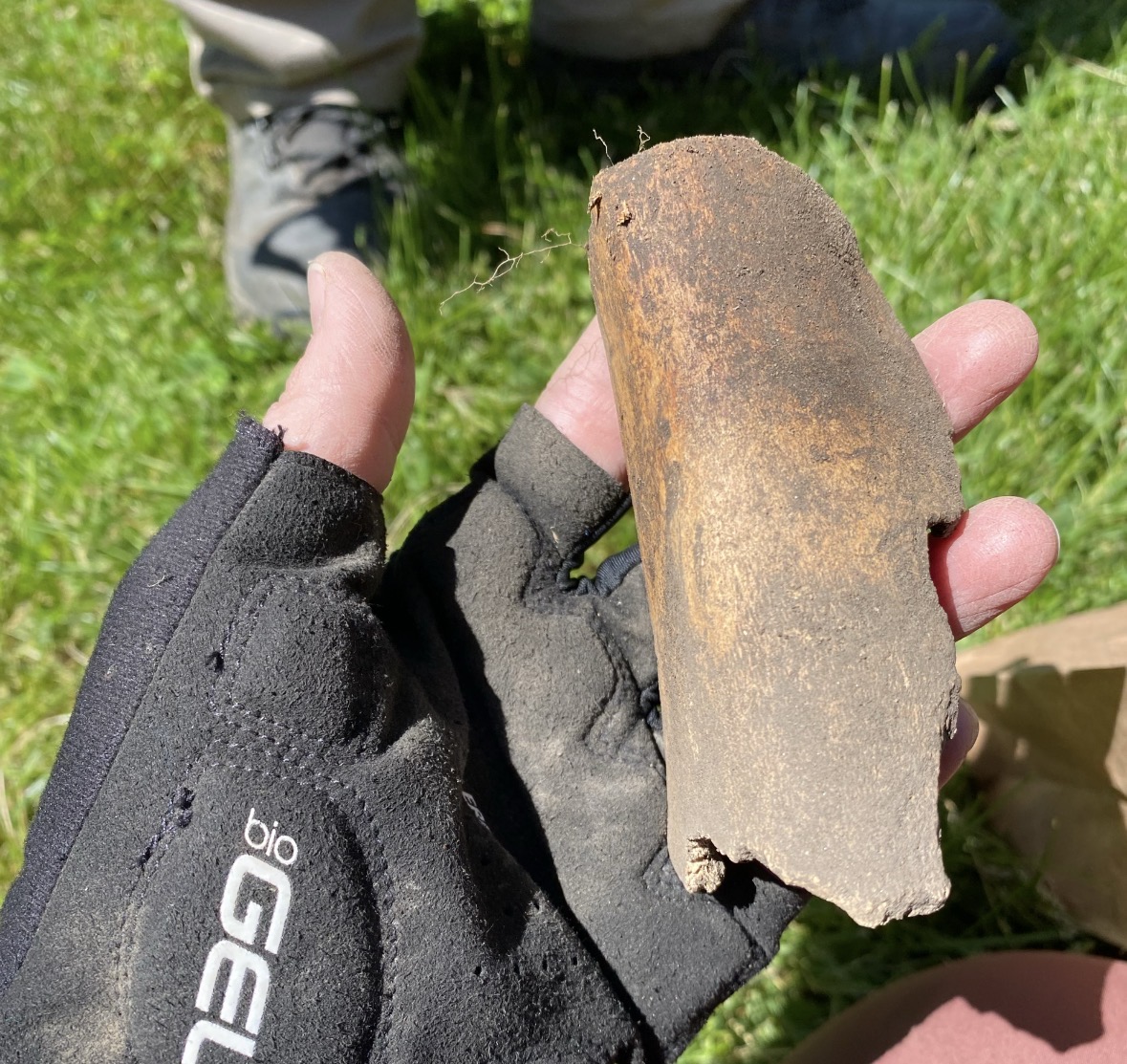
Some of the most interesting finds have come from within the midden. They have uncovered ceramic fragments that can help determine the time when the site was occupied. The midden also included a large cow bone. According to researchers, the bone’s size reflects Victorian-era eating habits. At the time, families often raised or hunted their own animals, usually eating fattier cuts of meat, including portions from the femur.
After artifacts are recovered, they are taken to a laboratory for further analysis. There, researchers identify exactly what each specimen is and what it can tell us about the past.
Although archaeology was not always considered a traditional STEM field, over the last fifty years there has been discussion over its place in STEM as archeologists use tools for genomic analysis. Archaeologists also collect data and analyze evidence using scientific methods to answer questions about how people lived long ago.
The dig will continue throughout the summer, and new discoveries are still being made. Recently there was a new structure found near the privy made of brick which function remains unknown. This is leaving the archaeologists eager to learn more.
More about the site and Victorian life in Part Two!
Link to field school website: https://ww1.oswego.edu/anthropology/archaeology-field-school-0


