By Leah Hromalik
Have you ever wondered what an archaeologist does? It isn’t just about finding famous artifacts in other countries and it isn’t about getting into high-speed chases. Archaeology is a field where precision and context are key.
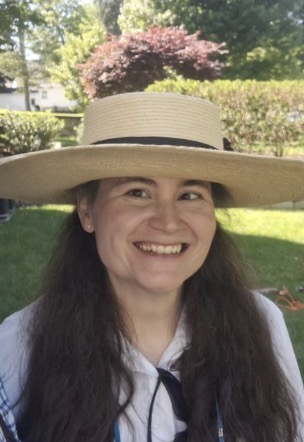
Dr. Ossa shows this. After graduating from the University of Chicago, Dr. Ossa became an archaeologist focusing on the Postclassical Period in Mesoamerica (900 CE until just before the arrival of the Spanish). She has studied the economic and social aspects of these communities, such as how changes in pottery reveal increased specialization and a growing regional economy.
She is also working on a field excavation at the McQhoster House, where she is investigating a Victorian-era midden, or trash deposit. By carefully studying everyday objects that people discarded, archaeologists can learn about how people lived, what they ate, and the goods they used centuries ago.
Dr. Ossa said she first became interested in archaeology after learning about excavations and discoveries in Ancient Egypt. That fascination eventually inspired her to pursue archaeology as a career.
She encourages students interested in archaeology to be curious and pursue questions about the past. Reading about different cultures, visiting museums, and learning about history are all great ways to begin exploring the field.
Archaeologists also rely on science, technology, engineering, and mathematics. They use chemistry to analyze artifacts, biology to study ancient remains, geography to understand landscapes, and mathematics to map excavation sites and record discoveries accurately.
From uncovering ancient pottery to piecing together how people lived hundreds or even thousands of years ago, archaeologists use STEM every day to better understand our past.

