
By Leah Hromalik
Have you ever wondered what everyday life was like during the Victorian Era? Archaeologists at the McWhorter House are uncovering clues that reveal how people lived more than a century ago.
One of these discoveries is midden – trash from the time in question. Before modern garbage collection, families often threw broken dishes, food scraps, and other unwanted items into designated areas outside their homes. What was once trash for them is now treasure for archeologists who use it to see what the lives of people at the time was like.
Animal bones found in the midden also tell an important story. Multiple deer bones discovered at the site suggests that families commonly used much more of the animal and more unusual animals than people often do today. Many households raised, hunted or butchered their own livestock, making use of a wide variety of cuts rather than only the most popular ones found in modern grocery stores.
The cow bone has evidence of bone marrow extraction (the bone was split open and has been cleaned out) showing that no part of the animal was unused.
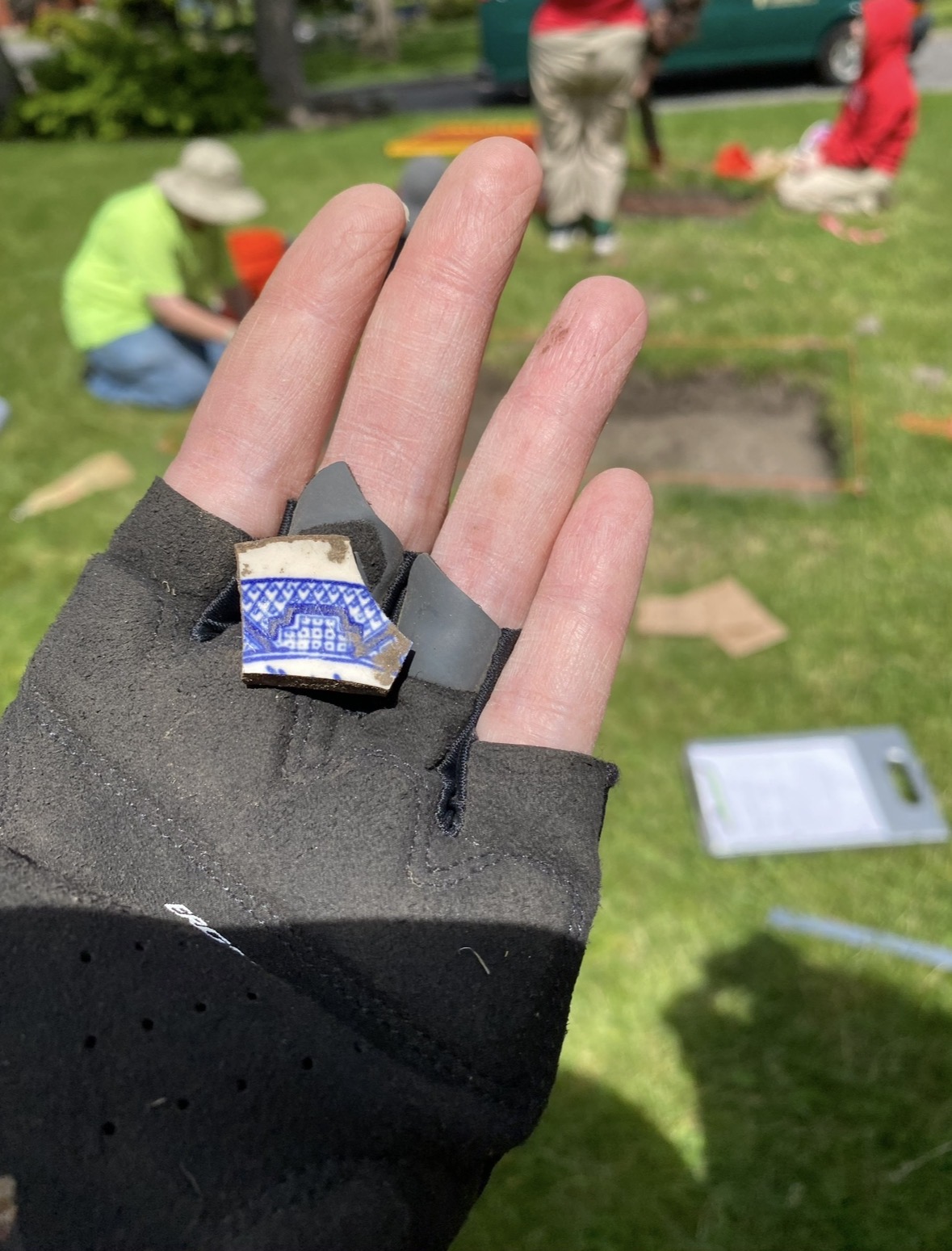
Broken ceramics (such as the one pictured above) are another common discovery. Although they may seem like simple pieces of pottery, they can help archaeologists determine when a site was occupied due to different styles and manufacturing techniques changing over time. Some ceramics and household items from the Victorian Era contained lead in their glazes. Lead was widely used because it made ceramics smoother and more durable. People at the time didn’t understand yet the risks lead had on their lives yet.
The field group also found evidence of lead pipes. During the Victorian Era, lead was a common plumbing material because it was easy to shape and resistant to corrosion. Today we know that lead can contaminate drinking water and cause serious health problems, which is why modern pipes are made with different materials. The pipes now are a great indicator for time periods.
Every artifact—from a broken plate to an animal bone or a section of old pipe—helps archaeologists reconstruct the daily lives of the people who once called the McWhorter House home. By utilizing this knowledge the picture of the past becomes clearer to us in the modern world.


