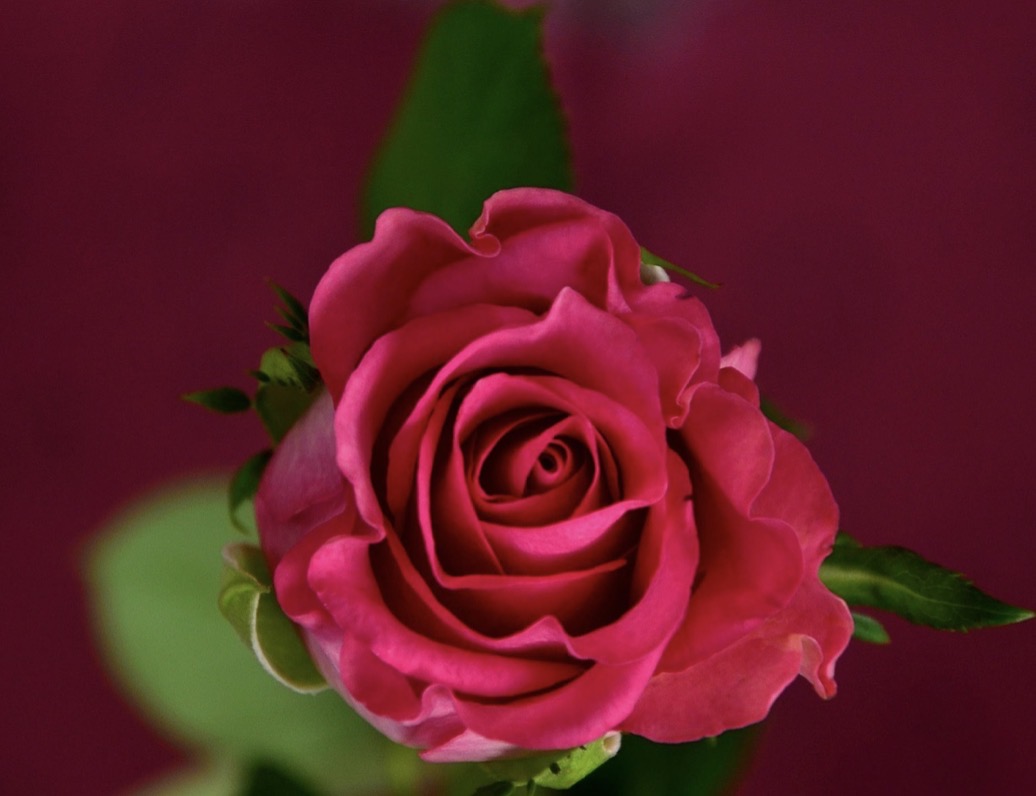
Roses are a symbol of love, often seen in bouquets on Valentine’s day and other romantic events or used in perfumes and teas, like rosehip tea. Some people dedicate their lives to this plant and its beautiful blooms. In Syracuse, the Syracuse Rose Society maintains the E.M. Mills Rose Garden, which houses over
3,000 different rose species. But what is the garden and why is it so special?
The Garden Then
Before the Rose Garden became a rose garden, it was first an home. James R. Haskins, a successful salt-mining businessman, purchased 50 acres in 1854 and continued to amass land, leaving the total 76 acres in the care of gardeners, who transformed the land from farmland to well-cared flowers and trees. He lives as a recluse for the next 30 years after his wife and only child died when she gave birth ; the land was then acquired by Major Alexander Davis, a wealthy former Civil War leader, when Haskins committed suicide.
Davis loved his English heritage deeply and sought to turn the land into an estate meant for a gentleman. He changed the property’s name to Thornden, a homage to the hawthorne, a plant common in both Britain and America, and British tradition of descriptive estate names. Davis worked tirelessly to achieve the property of his dreams ; he added a deer hunting reserve, Syracuse’s first golf course in 1855, stables, sunken formal gardens, and fishing ponds. After a failed run for Congress, Davis and his family left for England in 1877 and ended up staying there. On December 13, 1921, his widow sold the land to the city of Syracuse, which established the premises as parkland. The city expanded further on the land, building an outdoor pool, amphitheater, a multipurpose athletic field, tennis and basketball courts, and playgrounds. The park also had a rose garden, annual and perennial gardens, and a waterfall.
Shortly after the purchase, Edmund Mead Mills, the president of both the Syracuse Rose Society and American Rose Society at the time, became seriously ill and left for California to recover. In his absence, a rose garden in honor of his service was proposed. Syracuse Mayor Walrath approved of the plan and designs for such a garden in Thornden Park were underway. When it was completed in 1923, the garden had a pergola, garden house, and over 5,000 rose bushes. The present E.M Mills Garden was one of three rose gardens that were also dedicated to Mills and went through many location shifts: Kirk Park in 1911, behind the old library and chemistry building in Syracuse University in 1915, and Thorden Park in 1924. When Mills came back on July 2, 1924, the garden was in full bloom for its dedication.
The Garden Now
As said before, the garden has over 3,500 varieties of roses and is considered a prime location for memorable events like prom, graduation, and weddings. The park also has other attractions: a lily pond, an outdoor pool, a playground, athletic courts, a rentable pavilion along with plenty of green spaces to enjoy. The main attraction are the roses, of course. The Society hosts two main events devoted to roses, the Rose Show and Rose Day. The Rose Show is an event where rose growers, no matter their experience, showcase their plants and arrangements. Individual flower entries are evaluated based on the American Rose Society (ARS) guidelines: Form, Color, Stem and Foliage, Substance (petal quality), Size of the Bloom, and Balance and Proportion (how the flower compares to the stem); based on these, the winners are awarded items official American Rose Society (ARS) certificates, ribbons, silver trophies, and titles. Along with the competition, the show has raffles for rose bushes and baskets, rose exhibits (photography, arrangements, etc), and People’s choice voting, where the public can vote for the flowers they like best. For families, there are interactive fairy gardens, crafts such as making rose-scented play-doh and flower arrangement workshops. Rose Day is an annual event ,usually in June, in which visitors can enjoy light refreshments, garden tours, and rose experts speaking on topics like rose identification and pest control. There is also live music, pop-up shops with artisan goods and local rose art, and stations in which people can learn about volunteering at the garden.
The Roses
The garden’s vast collection features many unique plants such David Austin roses, which are planted in dedicated beds so their strong fragrance can waft to park benches nearby. The historic climbing roses are one the park’s most prized plants due to their age (some date back to 1920) and their resilience (they’ve survived generations of harsh seasons, location changes, and pests). Many of these older plants are also “once-bloomers”, plants that produce one extravagant flower in mid-to-late June and then go back to expanding their roots and canes in preparation for winter. Another rose highlight are the hybrid teas, a popular breed of rose known for its large blooms and large stems (3-8 ft long), making it highly favored in bouquets; the name comes from the fact that the type came from crossing ‘tea’ roses (the flowers’ smell reminded people of brewing tea and even though the blooms were elegant, the plant was prone to problems in colder weather) and ‘hybrid’ roses (plants that were tough but produced messy flowers). In 1867, Jean-Baptiste André Guillot, a French rose breeder, bred the two species together, making the first hybrid tea, and named it ‘La France’. Since then, the garden has had many hybrid teas, such as Lady Ursula, a pink rose first introduced in 1908, making it, what some believe, the oldest rose planting in the garden. In addition to these roses, the garden showcases miniatures (hardy roses that are 1-2 ft tall and best suited for pots), Polyantha (a disease-resistant, low-maintenance, and almost thorn-less rose that produces massive clusters of small blooms), and floribundas (hybrid teas crossed with Polyantha roses, famous for bearing many flowers in large blooms).
Works Cited
American Rose Society. “How Roses Are Judged – American Rose Society.” American Rose Society, 24 July 2024, rose.org/how-roses-are-judged/. Accessed 1 July 2026.
Case, Dick . “Get Ready for the Burst of Colors as the Roses Bloom in Thornden Park.” Syracuse.com, 7 June 2012, www.syracuse.com/opinion/2012/06/get_ready_for_the_burst_of_col.html. Accessed 2 July 2026.
City of Syracuse. “2023 Rose Day at Thornden Park.” Syr.gov, 2023, www.syr.gov/Events/City-Events-and-Ceremonies/2023/2023-Rose-Day-at-Thornden-Park. Accessed 2 July 2026.
David Austin. “Floribundas.” David Austin Roses – US, 2025, www.davidaustinroses.com/collections/floribundas. Accessed 2 July 2026.
Heirloom. “Why the Hybrid Tea Rose Remains the World’s Most Desired Flower.” Heirloom, 17 Feb. 2026, heirloomroses.com/blogs/how-to-articles/why-the-hybrid-tea-rose-remains-the-world-s-most-desired-flower?srsltid=AfmBOoppGiXW18CcOKmDnYrwcP62_xvUCEfNz-k9PT-5-cYINcHdOaDk. Accessed 2 July 2026.
https://www.facebook.com/thespruceofficial. “How to Grow Hardy Miniature Roses.” The Spruce, 2019, www.thespruce.com/growing-miniature-roses-1403035. Accessed 2 July 2026.
Koch, Laura. “The Untold History of Thornden Park in Syracuse.” WSYR, 10 Aug. 2022, www.localsyr.com/bridge-street/the-untold-history-of-thornden-park-in-syracuse/. Accessed 2 July 2026.
Mack, Donna. “Polyantha Roses: Tough and Easy Beauties.” Dave’s Garden, 25 Jan. 2018, davesgarden.com/guides/articles/polyantha-roses-tough-and-easy-beauties?__cf_chl_f_tk=y77WdX.PlAgGR6i0UDTuApkaywSnnOOTEsUWn6Bpi8U-1783021456-1.0.1.1-MgR_GUc7xTLp6Dn0DUikf4C1WU8uHmi.tWygYJysR7w. Accessed 2 July 2026.
Searing, Robert. “The Origins of Syracuse’s Thornden Park, a Story of Triumph, Beauty, and Tragedy.” Syracuse, 9 Aug. 2022, www.syracuse.com/living/2022/08/the-origins-of-syracuses-thornden-park-a-story-of-triumph-beauty-and-tragedy.html. Accessed 1 July 2026.
Smith, Ben. “Sunnyside Nursery.” Sunnyside Nursery, 11 June 2018, www.sunnysidenursery.net/sunnyside-blogs/2018/6/11/what-the-heck-is-the-difference-between-hybrid-tea-grandiflora-floribunda-roses. Accessed 2 July 2026.
Stack , Lois C. “Edmund Mills’ New York Legacy: Syracuse Rose Society and the E.M. Mills Memorial Rose Garden.” Syracuse Rose Society, 2011, www.syracuserosesociety.org/resources/pdf/Mills%20Legacy.pdf. Accessed 1 July 2026.
Syracuse Rose Society. “Syracuse Rose Society.” Syracuserosesociety.org, 2026, www.syracuserosesociety.org/SRS-activities.php. Accessed 1 July 2026.
Sytsma, Kenneth J. “Rosaceae | Plant Family | Britannica.” Encyclopædia Britannica, 2019, www.britannica.com/plant/Rosaceae. Accessed 2 July 2026.
Wagner, Jim. “E. M. Mills Memorial Rose Garden 90th Anniversary July 2, 2014.” Syracuse Rose Society, 2 July 2014, syracuserosesociety.org/resources/pdf/Archive%20millsgarden%2090%20PDF.pdf. Accessed 2 July 2026.
Wedding Spot. “Thornden Park.” Wedding Spot, 2025, www.wedding-spot.com/venue/5618/thornden-park/. Accessed 1 July 2026.